Start with the drainage
The biggest constraint in any bathroom is the toilet's connection to the soil stack. Toilets need a large pipe with a steady fall, so moving one more than a short distance can mean lifting floors or building boxing. Basins, baths and showers have smaller wastes and are easier to move, but they still need enough fall to drain properly.
Before you settle on a layout, ask a plumber to look at where the soil stack and drains are. A layout that works with them will be cheaper and more reliable.
Know your hot water system
Your hot water system affects which showers and taps will work. Combi boilers and unvented cylinders give mains-pressure hot water; tank-fed systems give lower pressure unless pumped. Many taps and showers, especially some imported models, are designed for higher pressures and perform poorly on tank-fed systems.
Need a plumber for this?
Describe the job and compare free quotes from plumbers near you.
- Free to use
- No obligation
- Compare local plumbers
- Quick online form
You'll continue to our quotes partner, MyJobQuote, to describe your plumbing job.
First fix and second fix
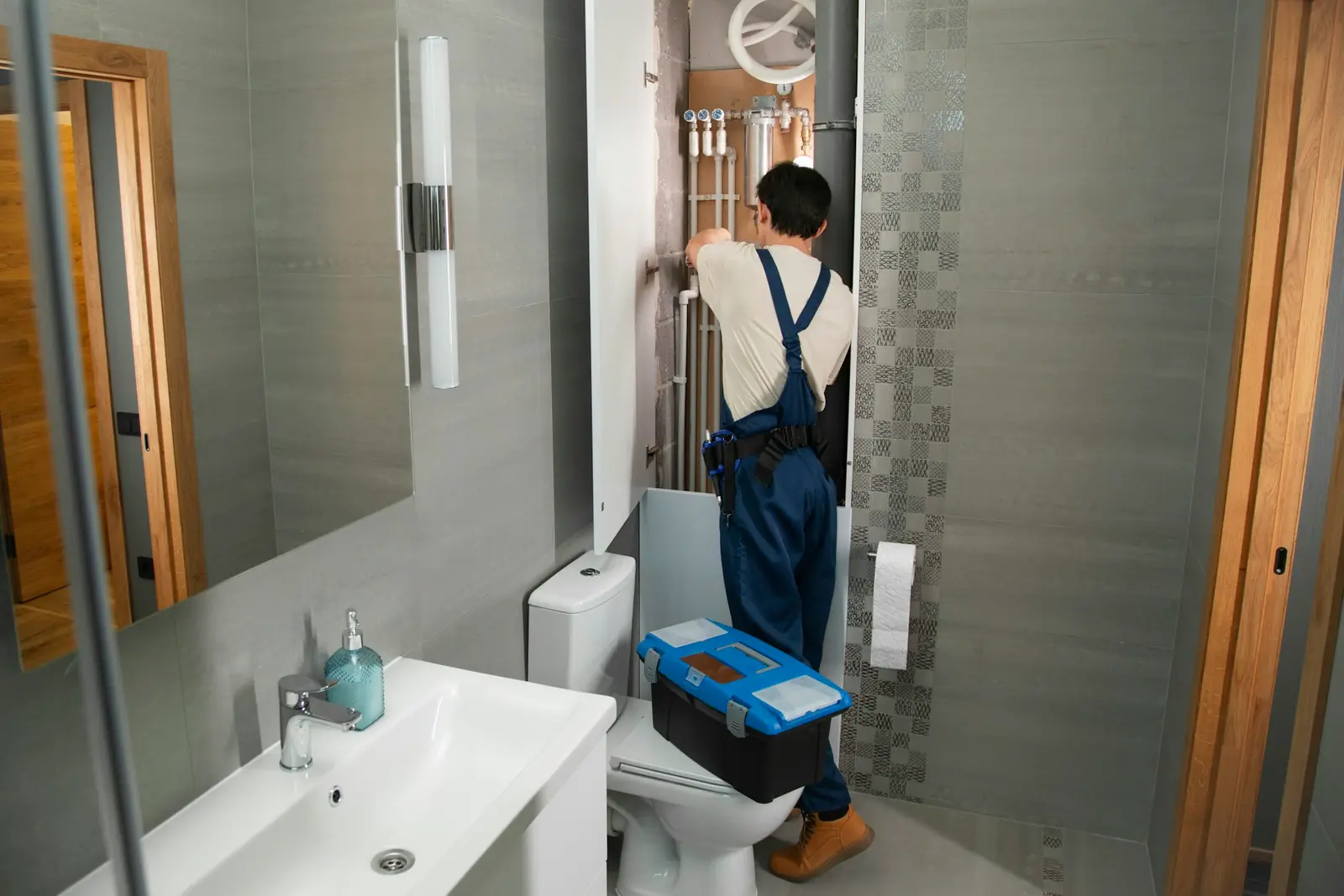
First fix is the pipework that goes in before walls are boarded and tiled: supplies to each fitting, wastes, the soil connection and any frame for a wall-hung toilet or concealed cistern. Second fix comes once the room is finished: fitting the suite, connecting taps and wastes, setting up the shower and testing everything.
Between the two, other trades do their work – electrics, plastering, tiling. Agree the order with everyone involved so nothing has to be pulled out again.
- Plan access panels for concealed cisterns and shower valves
- Fit isolating valves to every tap and toilet
- Replace old pipework while it's exposed
- Waterproof shower areas before tiling
- Pressure-test pipework before walls are closed up
Getting comparable quotes
Bathroom quotes vary widely because they cover different things. Some are plumbing only; others include removing the old suite, tiling, electrics, plastering and waste disposal. When you request quotes, describe exactly what you want done and who will supply the suite, so the prices you get back can be compared fairly.