The short answer
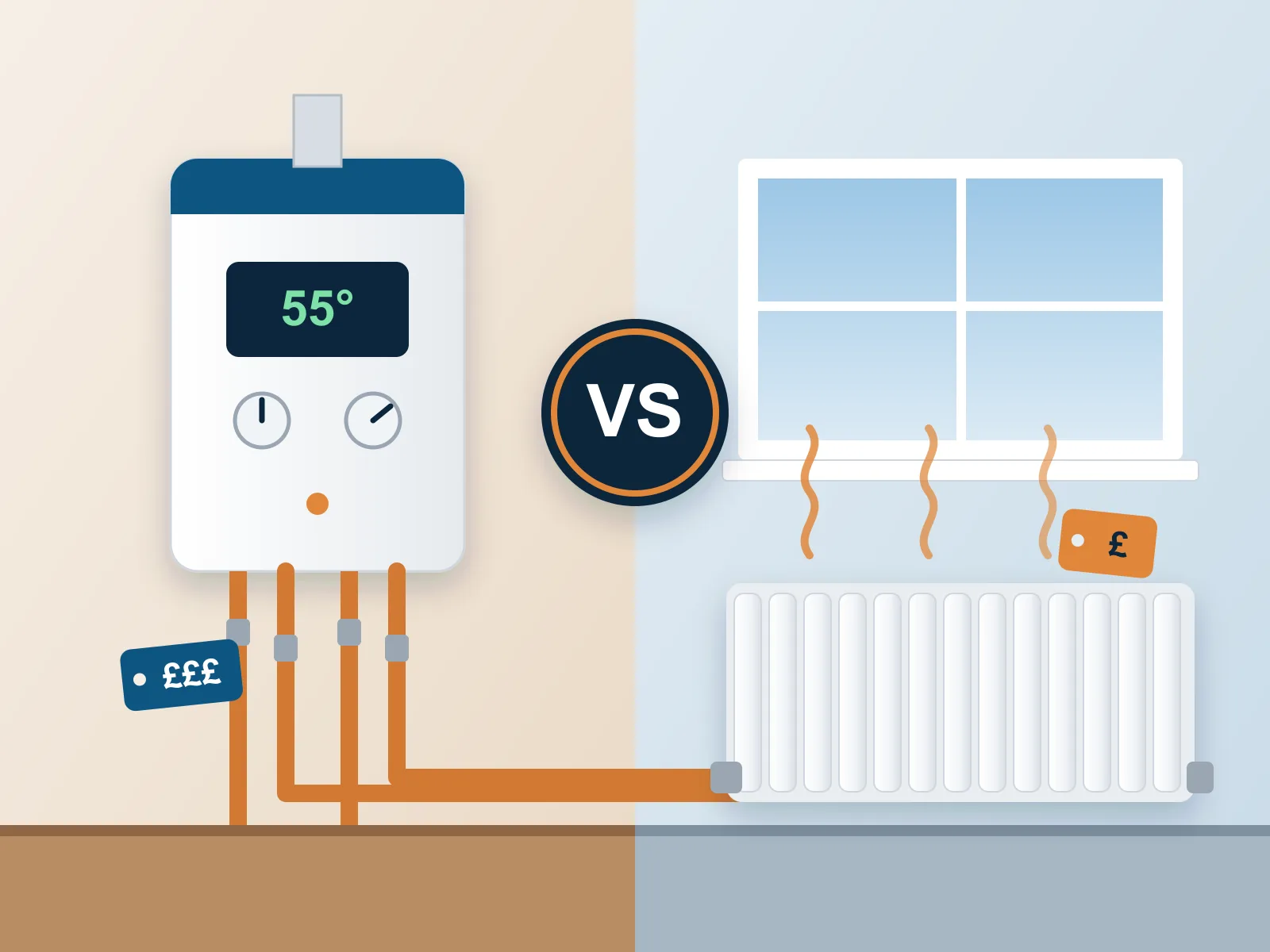
A new boiler is usually a four-figure job; a new radiator is usually a few hundred pounds. That gap is exactly why it pays to work out which one is actually letting you down before anyone starts quoting.
Think of it this way: the boiler makes the heat, the radiators hand it out to each room. If the whole house is cold, the hot water is unreliable or the boiler keeps locking out, look at the boiler. If one or two rooms are chilly while the rest are fine, or radiators are warm at the top and stone cold at the bottom, the problem is far more likely to be on the radiator side.
What each job actually involves
Replacing a gas boiler means taking the old one off the wall, fitting the new boiler and flue, connecting the gas, water and condensate pipes, cleaning the system and setting up the controls. A straightforward like-for-like swap is often done in a day; moving the boiler or converting from a tank-fed system to a combi can take two or three.
Replacing a radiator is a much smaller job. The plumber isolates or drains down the heating, takes the old radiator off, fits new brackets and valves if needed, hangs the new one, then refills and bleeds the system. If the new radiator has the same pipe centres as the old one, it's often an hour or two per radiator. A different size or position means altering the pipework, which takes longer.
Typical costs side by side
These ranges include fitting. Boiler prices vary with the make, the output you need and how much the system has to change; radiator prices depend heavily on the style you pick.
| Job | Typical price |
|---|---|
| Like-for-like combi boiler replacement | £2,000–£3,500 |
| System or regular boiler replacement | £2,500–£4,500 |
| Converting a tank-fed system to a combi | £3,500–£5,500 |
| Replace one standard panel radiator | £200–£450 |
| Larger, designer or column radiator, or a new position | £400–£1,000+ |
| Replace all radiators in a typical three-bed home | £2,500–£5,000 |
| Power flush of the heating system | £400–£700 |
Indicative UK prices. They vary with location, access and the condition of the existing plumbing – always compare written quotes for your own job.
Signs the boiler is the problem
Boilers tend to give plenty of warning before they give up completely. Age matters too: most last somewhere around 10 to 15 years, and once parts become hard to find, repairs get expensive quickly.
- No heating or hot water anywhere in the house
- Frequent lockouts, fault codes or pressure that keeps dropping
- Repeated breakdowns and repair bills within a year or two
- A yellow or orange flame instead of a crisp blue one – get it checked straight away
- Unusual noises such as kettling, banging or gurgling from the boiler itself
- Gas bills creeping up with no change in how you use the heating
Need a plumber for this?
Describe the job and compare free quotes from plumbers near you.
- Free to use
- No obligation
- Compare local plumbers
- Quick online form
You'll continue to our quotes partner, MyJobQuote, to describe your plumbing job.
Signs the radiators are the problem
Radiators rarely fail dramatically. They just quietly get worse. A radiator that's cold at the top usually needs bleeding; one that's cold at the bottom is often full of sludge. Neither automatically means replacement – bleeding, balancing the system or a flush can bring them back to life.
Replacement starts to make sense when a radiator is rusting through, weeping from the seams, too small for the room, or simply an eyesore you've had enough of. Upgrading to a double-panel radiator with fins can make a noticeable difference in a cold room without touching the boiler at all.
- Cold spots at the bottom or in the middle of the panel
- Rust patches, pinhole leaks or water marks on the floor
- One room always colder than the rest, even with the valve fully open
- Old valves that are seized, leaking or impossible to adjust
Should you replace both at once?
Sometimes, yes. If the boiler is old and the radiators are tired and full of sludge, doing both in one go means the system is drained, cleaned and refilled once rather than twice, and you won't be pumping dirty water from old radiators through a brand-new boiler. Many manufacturers also expect the system to be properly cleaned when a new boiler goes in, and a messy system can affect the warranty.
If you're thinking about a heat pump in the next few years, pause before buying new radiators. Heat pumps run at lower temperatures and often need larger radiators, so it can be worth planning the two together rather than paying for radiators twice.
Who can do the work
Any work on a gas boiler must be done by an engineer on the Gas Safe Register, and you can check their ID and registration online before they start. Once the boiler is in, it should be registered with building control and you should receive a compliance certificate. In England, a replacement boiler must also be fitted with suitable time and temperature controls.
Radiators are a different story. Swapping a radiator is ordinary plumbing and heating work, so a competent plumber can do it without being Gas Safe registered – as long as nobody touches the boiler or the gas supply.
Getting quotes you can compare
For radiator work, describe how many radiators you want replaced, their rough sizes and whether they're staying in the same place – a few photos help no end. For a boiler, an installer will usually want to see the property, check the gas supply and flue route and ask how many bathrooms you have before giving a firm price.
If the boiler does turn out to be the culprit, it's worth reading up on boiler replacement costs at Heating Quotes and getting at least three written quotes from Gas Safe engineers. For radiator swaps, valves and leaks, a local plumber is usually the quicker and cheaper call.