How they work
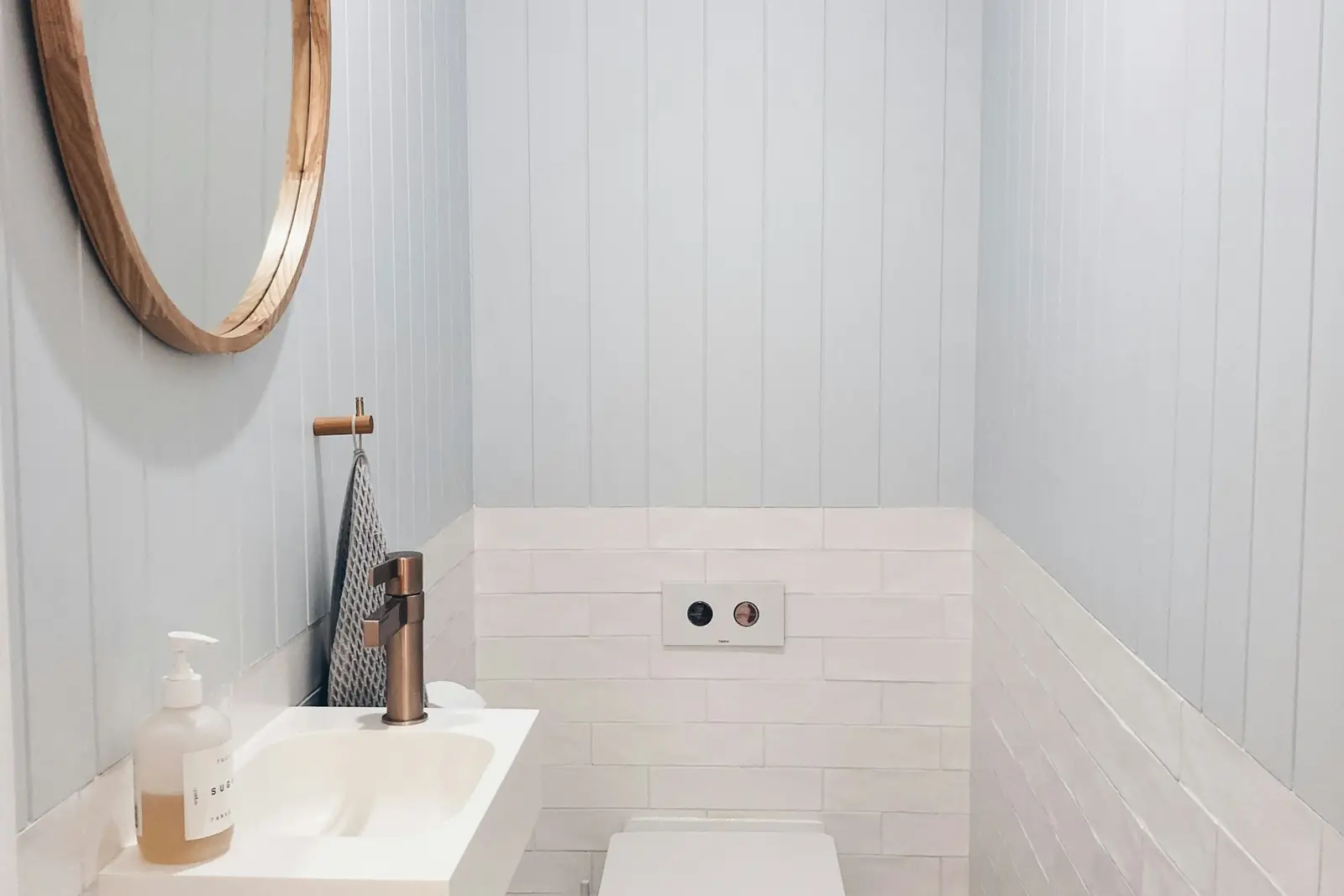
The toilet pan is bolted to a steel frame that's fixed to the floor and wall, then hidden behind a false wall or boxing. The cistern sits inside the frame, out of sight, and is operated by a flush plate on the wall. The frame takes the weight, not the wall finish.
The flush plate isn't just a button – removing it gives access to the cistern's valves for repairs.
Pros and cons
- Pro: easy to clean underneath and around
- Pro: makes small bathrooms feel more spacious
- Pro: the height can be set to suit the household
- Con: best fitted during a full refit, as the frame must be built in
- Con: repairs are done through the flush plate opening
- Con: more expensive to supply and fit than a close-coupled toilet
Need a plumber for this?
Describe the job and compare free quotes from plumbers near you.
- Free to use
- No obligation
- Compare local plumbers
- Quick online form
You'll continue to our quotes partner, MyJobQuote, to describe your plumbing job.
Installation
The frame needs a solid floor fixing and, ideally, wall fixings too. The soil connection and water supply are made inside the frame before it's boarded and tiled. Getting the height, the frame position and the flush plate opening right before tiling is essential – once the wall is finished, mistakes are expensive.
Repairs and maintenance
Running or weak flushes are fixed through the flush plate opening, by replacing the fill valve or flush valve seals. Most mainstream frames have parts available for many years. If the toilet ever feels loose, get it checked – a loose pan can strain the waste connection.