Why lead matters
Lead can dissolve into water as it sits in lead pipework, and there's no safe level of lead exposure – it's particularly harmful to babies, young children and during pregnancy. Water companies treat supplies to reduce how much lead dissolves, but the most effective solution is to remove lead pipes altogether.
How to spot lead pipes
Check the pipe coming in at the internal stopcock and any visible pipework nearby.
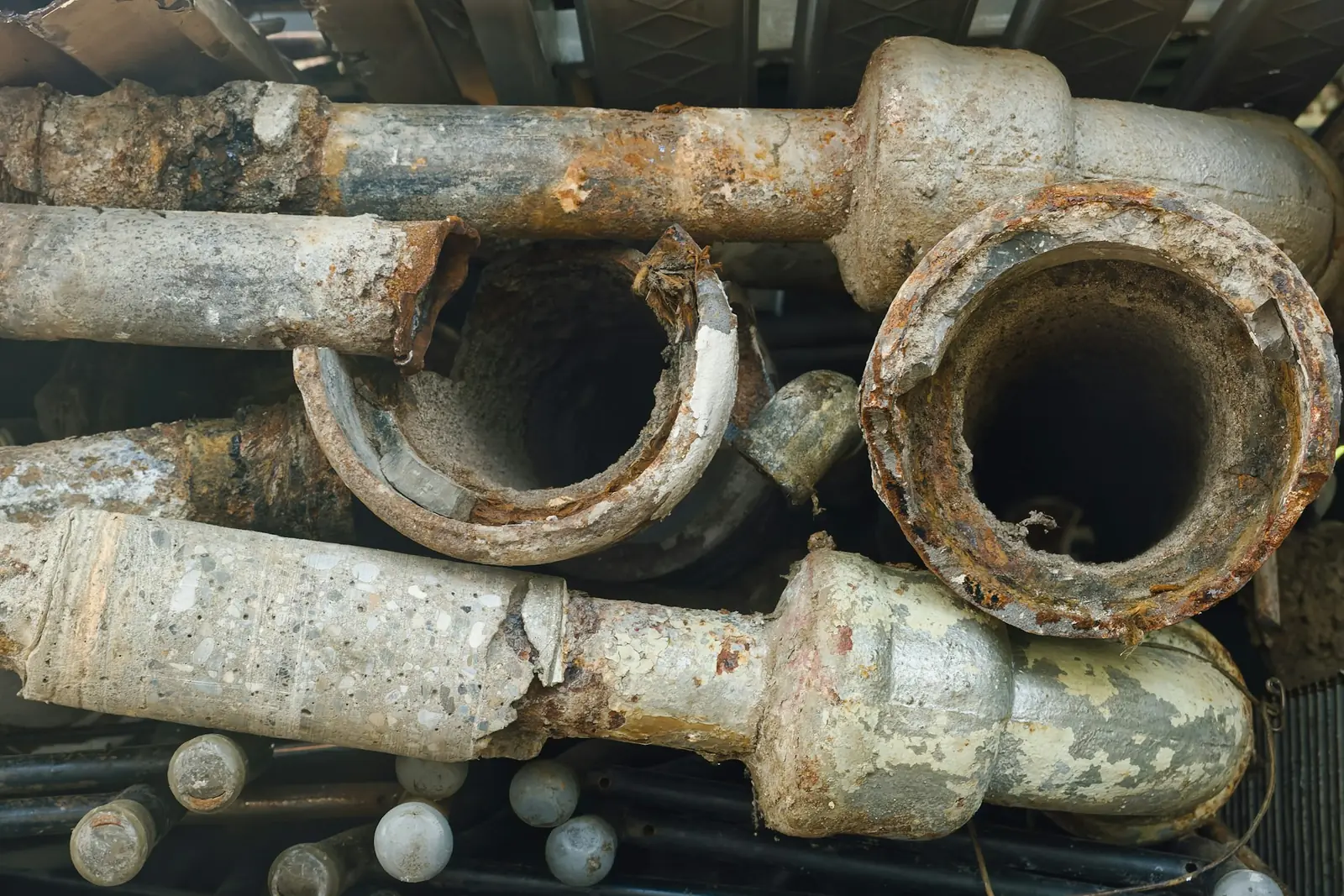
- Dull grey colour, often with a slightly rough surface
- Soft – scratching gently with a coin reveals shiny silver metal
- A magnet won't stick (it would stick to iron or steel)
- Bulbous, rounded joints rather than neat compression or soldered fittings
- Tapping it gives a dull thud rather than a ring
Need a plumber for this?
Describe the job and compare free quotes from plumbers near you.
- Free to use
- No obligation
- Compare local plumbers
- Quick online form
You'll continue to our quotes partner, MyJobQuote, to describe your plumbing job.
Who is responsible for what
Generally, the homeowner is responsible for the supply pipe from the property boundary into the house, and the water company for the pipe up to the boundary. In terraced streets, supplies are sometimes shared between several houses. Some water companies will replace their section of lead pipe, sometimes free of charge, when you replace yours – it's worth asking before you start.
What replacement involves
Replacing the external supply pipe usually means digging a trench from the boundary to the house, or using trenchless techniques that pull a new pipe through. Inside, any lead pipework is replaced with copper or plastic, and a new stopcock is fitted. It's a disruptive but worthwhile job, and best combined with other work such as a new kitchen or garden landscaping.